Expert Stove & Oven Repair in Norwood, MA
Appliance Repair for Homes & Businesses in Norwood, Westwood, Massachusetts and Nearby Areas
Stove and Oven Repair in Norwood, Massachusetts, Appliance Repair Pros
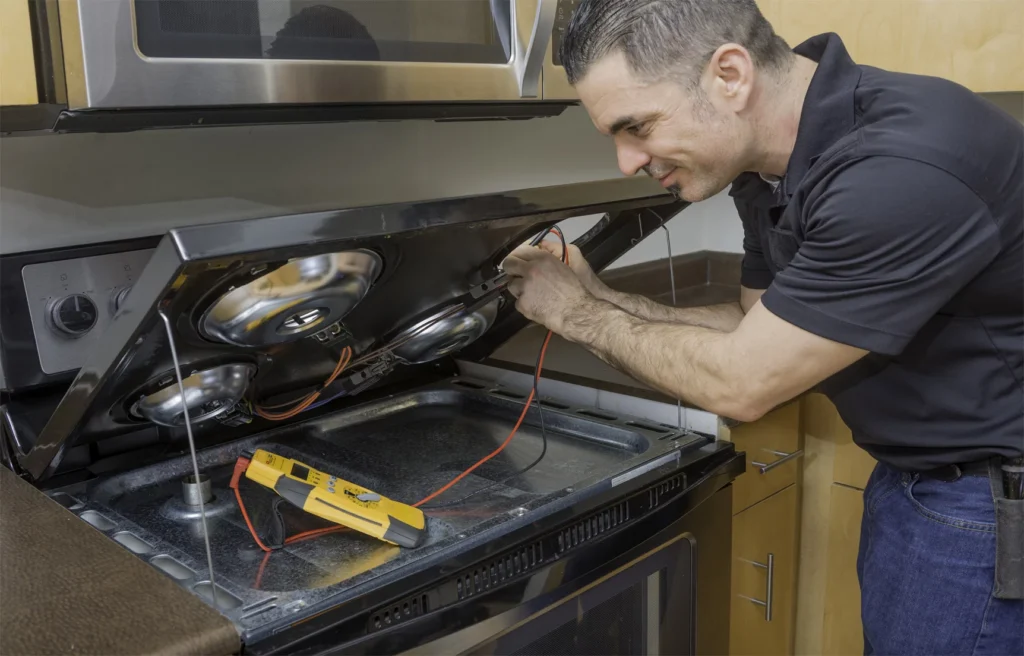
The kitchen range is the heart of the home, essential for everything from quick weeknight dinners to major holiday gatherings. Appliance Repair Pros provides expert stove, oven, and cooktop repair in Norwood, Westwood, and the surrounding towns of Walpole, Canton, and Dedham. We help homeowners who are facing ovens that won’t heat, burners that refuse to light, or glass cooktops that have stopped responding. Whether you have a vintage gas range in a classic Norwood colonial or a modern dual-fuel slide-in unit in a Westwood condo, we understand the specific gas and electrical setups found in local properties. Our technicians prioritize safety above all else, ensuring that gas lines are secure and electrical connections are stable. We bring a meticulous approach to diagnostics, aiming to calibrate your appliance for perfect baking results. Reach out to us for assistance when your cooking appliances need professional attention.
Stove and Oven Repair Services in Norwood
Cooking appliances come in many configurations, combining high heat, gas, and sensitive electronics. When one component fails, it can render the entire unit useless or unsafe. We service the full spectrum of residential cooking equipment, handling the high-voltage requirements of electric units and the safety protocols necessary for natural gas and propane appliances. Our goal is to ensure your kitchen is safe and fully functional.
Cooking systems we work on
- Gas ranges and freestanding stoves
- Electric ranges with coil or smooth top burners
- Built-in wall ovens (single and double)
- Gas cooktops and rangetops
- Induction cooktops
- Dual-fuel ranges (gas top, electric oven)
- Slide-in and drop-in units
- Convection ovens
What makes oven and stove repair tricky
- Dangerous voltage levels (240V) in electric units
- Potential for gas leaks if valves or lines are mishandled
- Delicate glass surfaces that can crack during service
- Hidden electronic control boards located near high heat sources
- Complex self-cleaning latch mechanisms
- Calibrating temperature sensors for accurate baking
- Anti-tip brackets and safe leveling requirements
Common Stove and Oven Problems We Fix
Oven is not heating up
Turning on the oven for a roast only to find it stone cold an hour later is a major inconvenience. In many cases, the bake element has burned out or the gas igniter has become too weak to open the safety valve. This is the most common repair we perform, especially leading up to Thanksgiving and the winter holidays.
Likely causes
- burned out bake or broil element (electric)
- weak or broken glow-bar igniter (gas)
- tripped thermal fuse
- failed temperature sensor
- control board relay failure
- incoming power issue (tripped breaker)
How we diagnose it
On gas units, we observe the amperage draw of the igniter to see if it is strong enough to trigger the gas valve. On electric units, we test the heating elements for continuity and inspect the wiring for signs of arcing or burnout.
What you can do right now
Check your home’s electrical panel. Electric ovens require 240 volts, which is a double breaker. Sometimes one half of the breaker trips, leaving the lights on but no heat for the oven.
Gas burner will not light
A gas burner that clicks incessantly but never lights is frustrating and can fill the kitchen with the smell of unburned gas. This is often caused by a lack of spark or a blockage in the gas flow. In Norwood homes with older gas lines, debris can sometimes affect flow, but usually, it is an appliance component issue.
Likely causes
- food debris clogging the burner portholes
- cracked ceramic spark electrode
- faulty spark module
- moisture in the burner assembly after cleaning
- failed burner switch / valve
How we diagnose it
We check for the presence of a strong blue spark. If the spark is present but the gas isn’t igniting, we inspect the burner cap alignment and clean the ports. If there is no sound of clicking, we test the switch harness and the spark module.
What you can do right now
Remove the burner cap and look for any spillover or debris blocking the small holes. Ensure the cap is sitting perfectly flat; if it is crooked, the gas will not flow to the spark.
Glass cooktop burner not working
On a smooth top electric range, you might turn a knob and get no response, or the burner might go to high heat and stay there, burning your food. This is usually an electrical failure under the glass surface involving the heating ribbon or the “infinite switch” behind the knob.
Likely causes
- failed infinite switch
- broken ribbon heating element
- loose wire connection causing arcing
- surface element limiter switch failure
- main control board failure on touch-control units
How we diagnose it
We safely access the area under the glass top to test the resistance of the element coils. We also test the voltage output from the switch to determine if the signal is reaching the burner.
What you can do right now
Try a different burner to confirm if the issue is isolated to one spot or if the whole stove is dead. Do not use a pot with a warped bottom, as this can cause the sensor to cycle off prematurely.
Oven temperature is inaccurate
If your cookies are burning on the bottom or your chicken is taking twice as long to cook, your oven temperature calibration is off. While some fluctuation is normal, consistent errors indicate a sensor or control issue.
Likely causes
- degraded temperature sensor probe
- control board calibration drift
- weak igniter taking too long to relight
- convection fan not circulating air
- door gasket seal letting heat escape
How we diagnose it
We measure the resistance of the temperature sensor at room temperature. We also inspect the oven gasket for tears. In some cases, we can digitally recalibrate the offset in the control board settings.
What you can do right now
Buy an inexpensive oven thermometer to place inside. Check if the variance is consistent (e.g., always 20 degrees cooler). This information helps us diagnose the problem faster.
Oven door is locked shut
This panic-inducing scenario often happens after running a self-cleaning cycle. The high heat engages a safety lock, and if the sensor fails or the latch melts, the door will not open even after the oven cools down.
Likely causes
- failed door lock motor assembly
- warped latch mechanism
- faulty temperature sensor reading “too hot”
- control board software error
How we diagnose it
We attempt to manually override the latch if possible. We test the lock motor and switches. If the latch is physically fused, we may need to disassemble the door panels to release it safely.
What you can do right now
Do not pry the door open with a screwdriver; you will shatter the glass. Allow the unit to cool for at least 2 hours. Try flipping the circuit breaker off for 5 minutes and back on to reset the computer.
Uneven baking
When you put two trays of biscuits in and one comes out burnt while the other is raw, the air circulation or heat distribution is failing. This is particularly noticeable in convection ovens where airflow is key.
Likely causes
- broken convection fan motor
- failed bake element (unit is heating only with broil element)
- blocked airflow from using foil on racks
- oven floor is not level
How we diagnose it
We verify that both the bake (bottom) and broil (top) elements are working during the preheat cycle. We listen for the convection fan operation and check the leveling legs of the range.
What you can do right now
Remove any aluminum foil you have placed on the bottom of the oven or on the racks. This blocks airflow and ruins heat distribution.
Gas smell near the stove
Smelling gas is a serious safety concern. If the smell is faint and only happens when you first light the burner, it may be normal. However, a persistent smell indicates a leak or a valve that isn’t closing properly.
Likely causes
- leaking gas regulator
- loose connection at the flex line
- failed safety valve inside the oven
- surface burner valve slightly open
How we diagnose it
We use electronic gas detectors and leak detection solution to test all connections from the wall to the internal valves. We pressure test the system to ensure integrity.
What you can do right now
If the smell is strong, evacuate the house and call your gas utility immediately. Do not turn lights on or off. If the smell is faint, check that all knobs are in the “Off” position.
Control panel is blank or beeping
Modern ranges are controlled by complex computers. A blank display or a random beeping sound usually points to an electronic failure, often caused by heat stress or power surges.
Likely causes
- blown thermal fuse
- main control board failure
- stuck button on the touchpad (user interface)
- loose ribbon cable connection
How we diagnose it
We test for incoming power to the board. If power is present but the display is dead, the board is likely at fault. We check the ribbon cable for corrosion or separation.
What you can do right now
Reset the breaker. If the beeping persists, leave the breaker off until we arrive to stop the noise.
Safety Notes for Stove and Oven Issues
Cooking appliances involve fire, gas, and electricity, making them the most potentially hazardous appliances to repair. Safety is our primary concern. If you encounter these situations, take immediate action.
- If you smell a strong rotten egg odor: This is natural gas. Do not try to find the leak yourself. Leave the home immediately and call the gas company or the fire department from a safe distance. Do not operate any electrical switches.
- If you see sparks or electrical arcing: Turn off the circuit breaker immediately. Arcing behind the stove indicates a short in the high-voltage wiring which can lead to an electrical fire.
- If the glass cooktop is cracked: Stop using the stove immediately. Spills can seep through the crack and reach the live electrical components underneath, creating a shock hazard.
- If flames are yellow or lifting off the burner: This indicates incomplete combustion and can produce Carbon Monoxide (CO). Stop using the burner and open a window. Gas flames should be blue.
- If the oven tips forward when the door is open: This means the anti-tip bracket was not installed. This is a severe crushing hazard, especially for children. Reach out to us for assistance in securing the unit.
Brands We Service for Stove and Oven Repair in Norwood
We service a wide variety of cooking appliances, from standard builder-grade coil stoves to professional-style ranges. Each brand utilizes different ignition systems and control logic. We have the training to handle the specific requirements of the major manufacturers.
Whirlpool family and similar designs (Whirlpool, Maytag, KitchenAid, Amana)
These are the workhorses of many Norwood kitchens. They typically use a “Direct Spark” or “Glo-Bar” ignition system. We frequently see issues with the control boards on the gas ranges and infinite switches on the electric models. They are generally very repairable and parts are readily available.
Common issues we see with these models
- weak glow-bar igniters preventing heating
- “F1” errors on the control board
- glass cooktop surface element failures
- self-clean latch jams
Accurate diagnosis is crucial because a weak igniter can mimic a bad gas valve. We test the amperage to distinguish between the two.
GE family (GE, Hotpoint, and related lines)
GE ranges are built tough, specifically the XL44 and Profile series. They often use specific sensor resistance values that differ from other brands. We are familiar with the “F7” stuck key errors common on their touchpads and the convection fan assemblies in the Profile series.
Common issues we see with these models
- keypad ribbon cable failure
- failed meat probe jacks
- convection fan noise
- bake element burnout
We know how to access the hidden temperature sensors in these units without damaging the porcelain interior.
Samsung and LG
These Korean brands have introduced massive innovation, including dual-door ovens and induction tops. They are heavily reliant on electronics. Troubleshooting often involves interpreting complex error codes and checking voltage at multiple test points on the PCB.
Common issues we see with these models
- relay board failure causing heat loss
- induction burner not detecting pans
- uneven temperature in dual-oven modes
- knobs breaking on gas ranges
We use specific technical bulletins to address the software glitches and sensor issues that can affect these high-tech appliances.
Frigidaire and Electrolux
Common in many renovated kitchens, these units often feature side-swing doors and front controls. We frequently address issues with the surface burner control boards and the thermal limiters that protect the electronics from overheating.
Common issues we see with these models
- surface element controls acting erratically
- oven taking a long time to preheat
- fan noise cooling the electronics
- plastic feet melting on grates
We pay close attention to the cooling fans in these units, as a failed fan can cause the entire control panel to shut down.
Bosch and Thermador
These premium brands require a specialized touch. They often use dual-fuel configurations (gas top, electric oven) which adds complexity. We are experienced with the “Simmer” circuits on Thermador burners and the precise temperature calibration required for Bosch baking modes.
Common issues we see with these models
- “click-click-click” continuous sparking
- display fading or dimming
- door hinge tension issues
- error codes related to cooling fans
Repairing these units often requires pulling the unit out of custom cabinetry, which we do with extreme care to protect your floors and woodwork.
Understanding Common Oven Error Codes
Modern ovens display error codes to signal internal failures. These codes give us a head start on diagnosis, though manual testing is always required to confirm the broken part.
- F1 / F10: Runaway temperature. The oven thinks it is getting too hot or the sensor has failed.
- F3 / F30: Open sensor circuit. The temperature probe usually needs replacement.
- F9: Door lock failure. The latch switches are not reading correctly or the motor is stuck.
- F7: Stuck key. A button on the touchpad is permanently depressed or shorted.
- F5: Relay or control board failure. The brain of the oven cannot send power to the elements.
- F2: Over temperature. Similar to F1, often caused by a welded relay on the board.
- LOC / Lock: The control lock or child lock is active. This is often a setting, not a failure.
- bad linE: Power supply issue. The unit is not detecting the correct voltage from the wall.
Maintenance Tips for Stove and Oven Owners in Norwood
Maintaining your cooking appliances can extend their lifespan and prevent holiday cooking disasters. Here are practical tips for homeowners in our area.
Be careful with the self-clean cycle. We strongly advise against running the self-clean cycle right before a major holiday like Thanksgiving. The intense heat (over 900 degrees) puts massive stress on the electronic components and often causes the thermal fuse or control board to fail. Stick to manual cleaning if a big meal is approaching.
Keep gas ports clean. If you have a gas range, spills can clog the tiny holes in the burner heads. This leads to uneven flames and poor ignition. Use a toothbrush or a pin to gently clear these ports. Ensure the burner caps are centered correctly after cleaning.
Check the door gasket. The rubber seal around the oven door traps heat. If it is torn or brittle, heat escapes, causing the oven to run longer and burn the knobs above the door. If you feel heat blowing on your legs while standing in front of the stove, your gasket likely needs replacement.
Protect your glass cooktop. Sugary spills (like jam or pie filling) must be cleaned immediately. If sugar cools on the hot glass, it can bond to the surface and pit the glass permanently. Use a razor scraper and specialized cooktop cleaner to remove burnt-on food.
Don’t block the airflow. If you have a gas oven, do not cover the bottom slots with foil. This blocks the airflow needed for combustion and can cause dangerous carbon monoxide buildup.
Recalibrate if needed. Most modern ovens allow you to adjust the temperature offset (e.g., +10 or -10 degrees) via the settings menu. Consult your manual if you consistently feel the oven runs hot or cold.
Service Area for Stove and Oven Repair in and Around Norwood, Massachusetts
We are proud to serve the local community with responsive, expert repair services. We cover the neighborhoods around Norwood Hospital, the historic homes near the Town Common, and the residential streets stretching out toward Route 1. We also provide service to the immediate surrounding towns.
Nearby areas we serve:
- Norwood
- Westwood
- Walpole
- Canton
- Dedham
- Sharon
- Medfield
- Islington
Zip codes we serve: 02062, 02090
Frequently Asked Questions
Why does my oven take so long to preheat?
A slow preheat usually indicates that only one of the heating sources is working. In electric ovens, the bake element might be hidden under the floor. If it burns out, the oven tries to heat using only the broil element, which takes a long time. In gas ovens, a weak igniter is the most common culprit.
Is it worth repairing a 15 year old range?
Older ranges, especially gas models or simple electric coil units, are often very robust and worth repairing. They have fewer electronics to fail. However, if the oven cavity is rusted through or parts are obsolete, replacement might be safer. We provide an honest assessment upon inspection.
Can you fix a cracked glass cooktop?
We can replace the glass top assembly, but we cannot repair the crack itself. The glass must be replaced to ensure safety and structural integrity. Note that glass tops can be expensive parts, so we will help you compare the repair cost against the price of a new unit.
Why does my gas stove click but not light?
This is usually due to moisture or debris disrupting the spark. If you recently cleaned the stove, let it dry out. If it persists, the spark module or the ignition switch harness may be failing. If you don’t hear a click at all, the switch is likely dead.
Do you work on dual-fuel ranges?
Yes, we are experienced with dual-fuel ranges that feature a gas cooktop and an electric oven. These units require a technician who understands both gas safety and 240-volt electrical systems. We service brands like Wolf, Thermador, and KitchenAid that produce these units.
What should I do if my oven door is stuck locked?
Do not force it. This typically happens after a self-clean cycle. Try turning the circuit breaker off for 10 minutes to reset the control board. If it remains locked, reach out to us for assistance. We know how to manually release the latch without damaging the door.
Why do I smell gas when I turn on the oven?
A small puff of gas smell upon ignition is normal. However, if the smell lingers, it means the igniter is taking too long to light the gas, or there is a leak. If the igniter is weak, gas flows for 30-60 seconds before lighting, creating that smell. This requires a new igniter.
Do you have parts on the truck?
We stock our trucks with common parts like gas igniters, bake elements, and thermal fuses that fit many Whirlpool, GE, and Frigidaire models. This allows us to complete many repairs on the first visit. Specialized control boards usually need to be ordered.
Why is the fan running after I turn the oven off?
This is likely the cooling fan, which protects the electronic control board. It is normal for this fan to run for 20-45 minutes after cooking to cool down the components. If it runs for hours, the limit switch or relay may be stuck.
Can you calibrate my oven temperature?
Yes. If your oven is consistently hot or cold, we can adjust the calibration settings in the control board or check the sensor resistance. We recommend you verify the error with an oven thermometer before we arrive so we know how much to adjust it.
Conclusion
Appliance Repair Pros is your local expert for keeping the kitchen running smoothly in Norwood and Westwood. We understand that a broken oven or stove disrupts your family meals and can even be a safety hazard. Our team approaches every job with a focus on safety, accuracy, and respect for your home. Whether you have a gas burner that won’t light or an electric oven that won’t heat, we have the tools and experience to fix it right. Reach out to us for assistance with your cooking appliance repair needs.